Director David Moreau has built a reputation for delivering visceral, unconventional horror experiences. After last year’s audacious one-take zombie thriller MadS, expectations ran high for his latest Shudder offering, Other. Unfortunately, while the film showcases ambition and some genuinely unsettling moments, it ultimately collapses under the weight of its own scattered ideas.
A Homecoming No One Wants
Other follows Alice (Olga Kurylenko), who returns to her childhood home following her mother’s death, only to discover the house outfitted with extensive surveillance technology and haunted by something far more sinister than memories. What begins as a psychological exploration of childhood trauma quickly morphs into something more supernatural—and therein lies the film’s central problem.
The Kurylenko Show
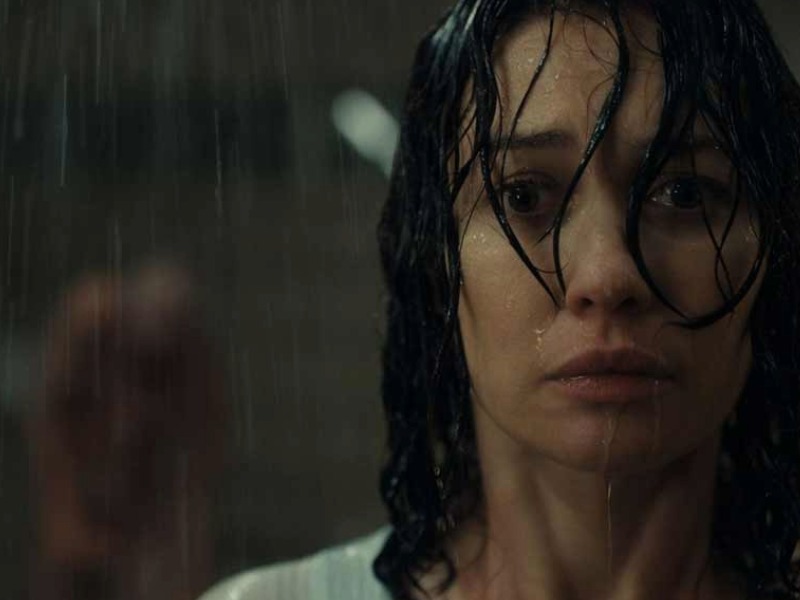
If there’s one undeniable strength to Other, it’s Olga Kurylenko’s committed performance. The actress holds her own throughout, whether dancing with abandon in her childhood bedroom, berating unhelpful customer service representatives, or falling apart when forced to confront her hideous childhood. In what amounts to essentially a one-woman show, Kurylenko delivers the emotional authenticity the film desperately needs.
The film employs a striking visual gimmick: only the female lead’s face is clearly shown, with other characters’ faces either obscured by shadow or shot out of frame. It’s an interesting stylistic choice that raises questions about perception, objectification, and the male gaze—questions the film never quite manages to answer satisfactorily.
A House That Never Held Peace
The production design excels in creating a home that looks like it never held a peaceful emotion—all sharp angles outside and décor woefully stuck in the past. The house is heavily insulated from the outside world by an elaborate security system worthy of a CIA dark site—a paranoid’s idea of heaven. The atmosphere Moreau creates is undeniably oppressive and unsettling.
There are generous jump scares and gory bits, and the extremes of security features keep the protagonist housebound in intriguing ways. The opening sequence particularly stands out, featuring impressive practical makeup effects that immediately grab your attention.
Too Many Cooks in the Horror Kitchen
Here’s where Other falters. The film throws paranoia, grief, trauma, abuse, pain, gender roles, and even modern surveillance technology into the stew without much consideration as to how the ingredients would work together. Is this a meditation on childhood abuse? A commentary on beauty standards and motherhood? A J-Horror-inspired ghost story? A Lynchian descent into madness? The answer frustratingly seems to be “all of the above,” resulting in a muddled mess that never commits to any single vision.
Moreau seems unable to figure out what story he’s telling or the best way to tell it. The film’s nods to commentary on gender roles and the need to become and stay beautiful feel shallow and insincere. We glimpse the trauma of Alice’s upbringing—a stage mother forcing her daughter into beauty pageants with draconian demands—but this thread gets tangled with supernatural elements that distract rather than enhance.
Technical Missteps
The decision to shoot in English rather than Moreau’s native French proves problematic. The dialogue often sounds awkwardly translated, and the relationship between Alice and her boyfriend sounds particularly stilted and disingenuous. This adds an unintentional amateur quality to scenes that should crackle with tension.
Multiple reviewers noted another significant issue: many scenes important to the plot are filmed in such dim lighting that it’s impossible to tell what’s happening unless watching in a pitch-dark room. It’s a frustrating choice that builds annoyance rather than suspense.
The Ending That Wasn’t
Perhaps most damning is the film’s conclusion. Many viewers described the ending as atrocious, with the film seemingly unable to stick the landing after 90 minutes of mounting tension. The story doesn’t provide the promised payoff it began with, leaving audiences confused about the “why” behind everything they’ve witnessed.
The Verdict
Other had all the ingredients for a compelling psychological horror film about returning to the place of your trauma and confronting painful truths. At its core, it needed to be a study of madness—a story of a woman forced back to a place that forged her through great pain. Instead, it’s a film that too often flees from its best ideas to pursue surreal tangents that lead nowhere meaningful.
The movie earns points for Kurylenko’s fearless performance, effective production design, and some genuinely creepy moments. But these positives can’t overcome the fundamental narrative confusion, awkward dialogue, and a finale that fails to deliver on the film’s atmospheric promise.
For hardcore horror fans curious about Moreau’s work or Kurylenko completists, Other might warrant a single watch. But for most viewers, this is a homecoming you can skip.
Other is currently streaming exclusively on Shudder and AMC+.
What did you think of Other? Did the experimental approach work for you, or did it leave you as confused as Alice in her mother’s house? Share your thoughts in the comments below!
Rating: 3/5