Don’t go in expecting the Atari game. The film isn’t based on the classic Pitfall!, and despite its title it has no connection to the video game. This is a Canadian backwoods slasher-survival movie directed by James Kondelik, with the tagline “If the fall doesn’t kill you… He will.”
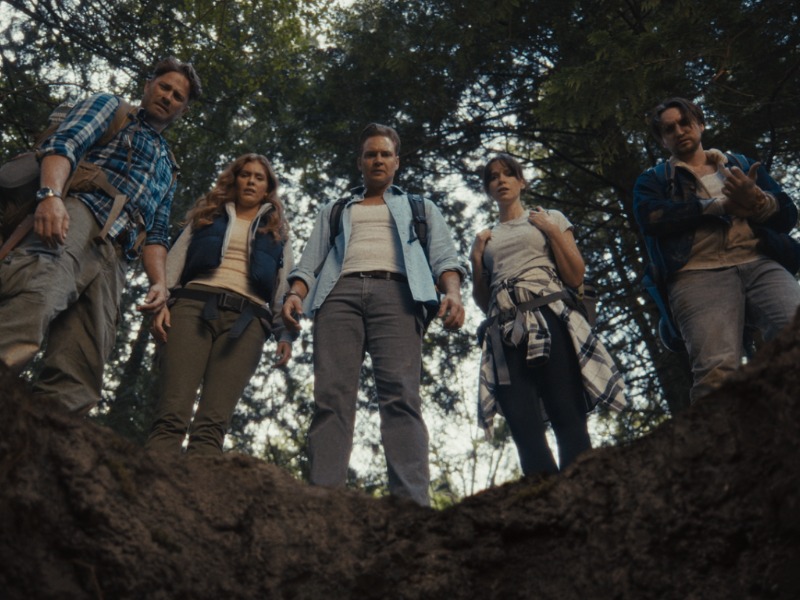
The premise is simple. Five years ago, Scott and his sister Ashley were the sole survivors of a car crash that killed their parents. To process the loss, they return to the woods for the camping trip their family never got to take, bringing their partners and a tagalong friend, Lars. The cast includes Marshall Williams as Scott, Alexandra Essoe as Ashley and Richard Harmon as Lars. Former UFC fighter Randy Couture plays the film’s threat, a maniacal woodsman.
The hook comes early: a young man separated from his friends falls into a ten-foot pit of spikes, which impales his leg and traps him, and he soon learns the fall was no accident. The title works as both a literal trap and a metaphor for grief, guilt and bad decisions that are hard to climb out of.
A Cold Open That Works
One of the film’s smartest choices is where it starts. One reviewer noted that it picks up at the tail end of an earlier group’s massacre by the Hunter, dropping the viewer straight into the action. It implies a longer history of violence in these woods and sets expectations before the main characters are even introduced. Plenty of low-budget horror spends twenty minutes on introductions, so this is a welcome change.
The Central Problem: Drama vs. Horror
The biggest divide among reviewers is the film’s attempt to be both a character drama and a horror thriller. One critic called this both a blessing and a curse.
The family-trauma material is sincere. Ashley’s alcoholism, her estrangement from Scott and a newly discovered pregnancy are all part of the emotional baggage the film loads onto the trip. Some viewers connected with it. One festival attendee said the film delivers an emotional punch and is a story about guilt, survival, and the weight of past choices.
Others found it dragged the film down. One critic argued that the constant focus on the parents’ deaths bogs the movie down, detracting from the horror most viewers came for. Another described the characters as bleating out their issues at such length that it’s a relief when the maniac woodsman arrives to shut them up. That’s harsh, but it captures a common complaint about horror that stops for therapy sessions.
Pacing and Runtime
At 108 minutes, the film runs long for what it is. One review said it feels too long for the story being told, and that trimming some of the sibling drama would make for a more cohesive watch. Viewer reactions to the pacing are mixed. Some felt the first half was rushed, while others felt the film stalls once the characters start talking. One reviewer who liked the film’s momentum said it doesn’t really stop running, falling, jumping and killing until the credits roll.
The Violence and the Villain
The kills are the most consistent point of praise. One negative review still acknowledged decent production values and a few impressively gnarly kills. A festival podcast billed the film as survival horror with brutal practical effects, which will appeal to gore fans who prefer physical effects over CGI.
The villain is more divisive. Some viewers found him effective as a “force of nature.” Others complained that the killer’s motivation was completely unclear, and a harsher Rotten Tomatoes reviewer called him an annoying forest rampager. If you want a deeply explained antagonist, this may frustrate you. If you want a relentless presence stalking people through the trees, it’s closer to what the film delivers.
Performances and Tone
Alexandra Essoe is the name most horror fans will recognize, and one reviewer who has followed her since Starry Eyes called her presence a highlight. Richard Harmon’s Lars gets singled out too: one reviewer said the acting is what saved the movie from being a total disaster, especially Lars. The performance of the character trapped in the pit draws more criticism, with one viewer calling it weak and forced.
Tone is another sticking point. Despite the heavy drama, some reviewers read the film as unintentionally funny, and one wrote that it’s as if the cast of Friends had strayed into Deliverance. Whether you find that charming or distracting depends on how much you like the self-serious-slasher mashup.
The Third Act
Even lukewarm critics tend to say the finale is the best part. One review called the final act quite kick ass, though the journey to get there leaves much to be desired. Another viewer said the middle and final stretches redeem a rushed opening. Not everyone agrees: one reviewer complained that the movie is littered with nonsensical situations and solutions, especially in the third part. Genre films often get a pass on logic if the payoff is satisfying, so your tolerance for plot holes will decide your verdict.
What the Numbers Say
The reception is solidly middling:
- Rotten Tomatoes shows 62% from critics (13 reviews) and 84% from audiences
- IMDb users rate it 4.5
- Bingebase shows a 6.0 “Binge Score” and a 6.5 TMDB rating
The gap between critics and general audiences on Rotten Tomatoes suggests horror fans looking for blood and a simple premise are more forgiving than reviewers scoring it as filmmaking.
Who Should Watch It
Watch it if you love 80s-style camping and hiking horror, enjoy practical gore and a relentless backwoods killer, and can tolerate some clunky dialogue for a strong finale.
Skip it if you hate melodrama inside your slashers, need a tight runtime and coherent logic, or want a fully developed villain.
Final Verdict
Pitfall has a great central image, a clever cold open, some gnarly kills and a few standout performances. It’s also overlong, tonally uneven and held back by drama that interrupts the horror. As one reviewer put it, almost every element has both a positive and a negative, which makes it a true middle-of-the-road watch. It isn’t essential, but for the right audience it’s an entertaining way to spend a dark evening.
RATING: 3/5